Fahraj, Yazd: A Historical Reflection
Located in the heart of the desert and along the path of several qanats—including the UNESCO-listed Zarch Qanat, the longest qanat in Iran—Fahraj has flourished through the innovative use of underground water resources. The local community has developed sustainable agriculture through subsurface and drip irrigation, establishing over 300 greenhouses. Additionally, desert-adapted animals such as camels and the Persian jird are bred here, contributing to the village’s appeal as a unique ecotourism destination.
To combat desertification and support tourism, villagers have planted drought-resistant flora, stabilized shifting sands, and established two desert camps, attracting over 10,000 visitors annually. This approach has transformed Fahraj into a model for sustainable water resource management in arid tourism.
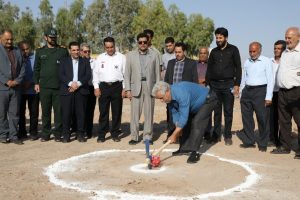
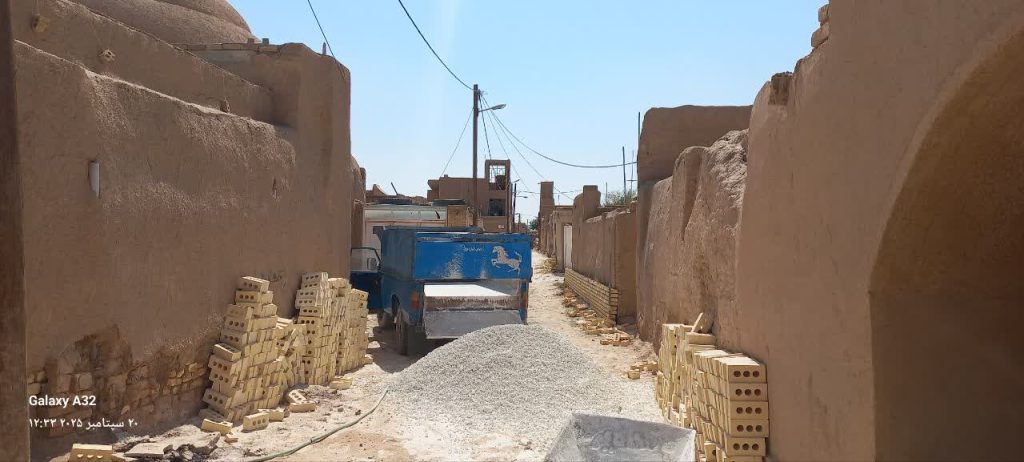
Fahraj’s sustainability owes much to the community’s deep sense of heritage conservation. The villagers have protected historical structures and ensured that modern development occurs outside the historical core. Since 2003, the historic axis of the village has been undergoing revitalization for heritage preservation and tourism development, supported by the intergenerational transfer of local knowledge.
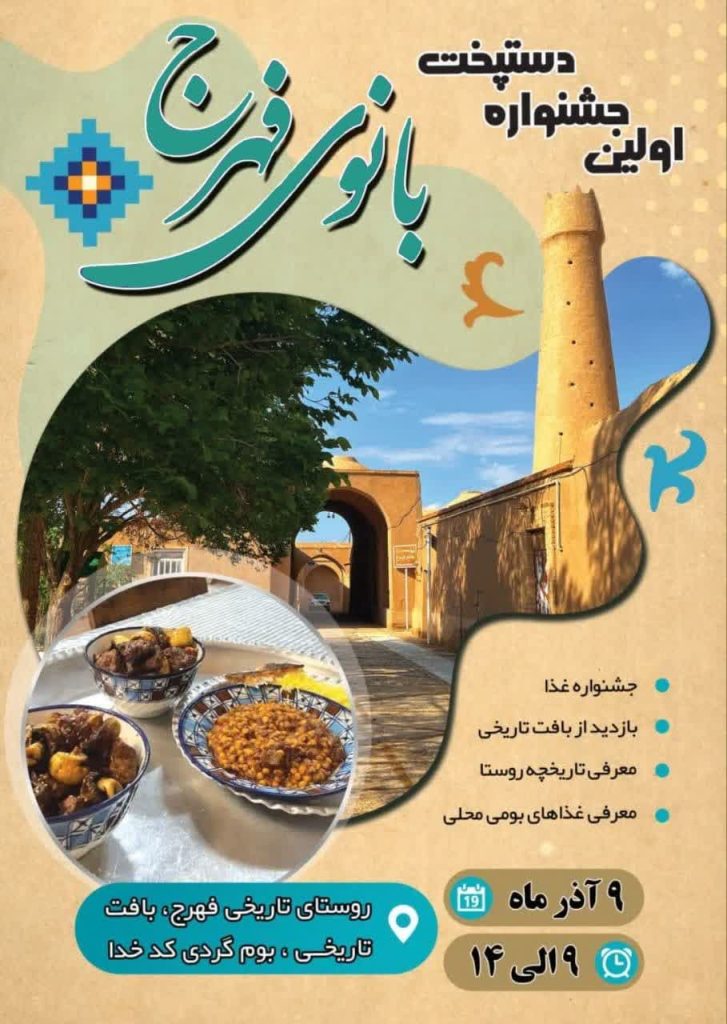
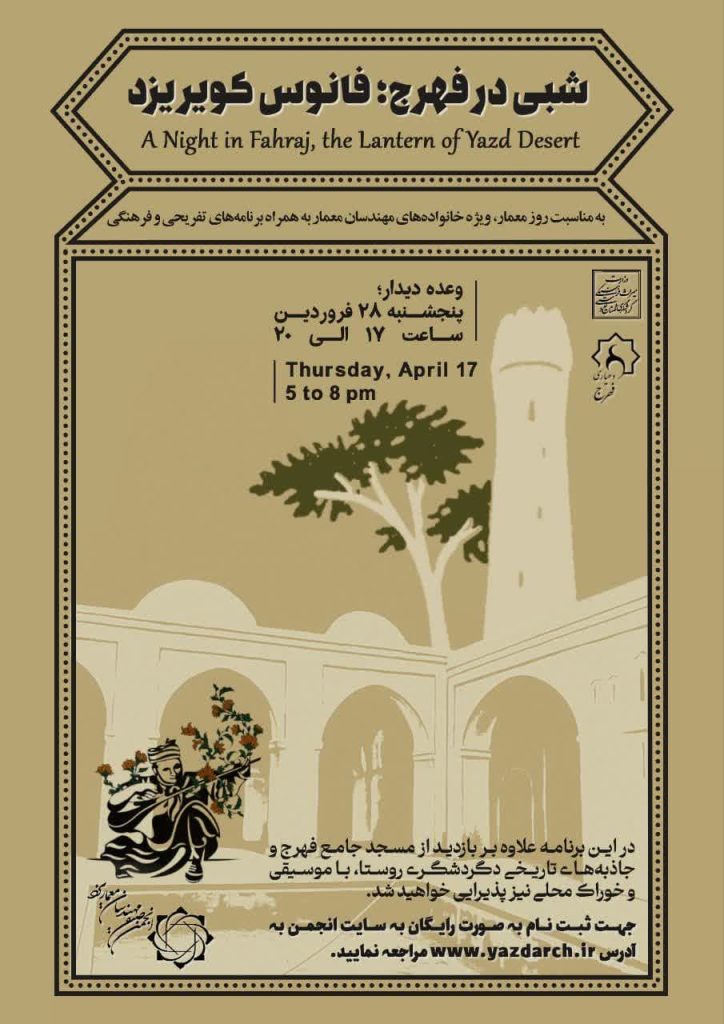
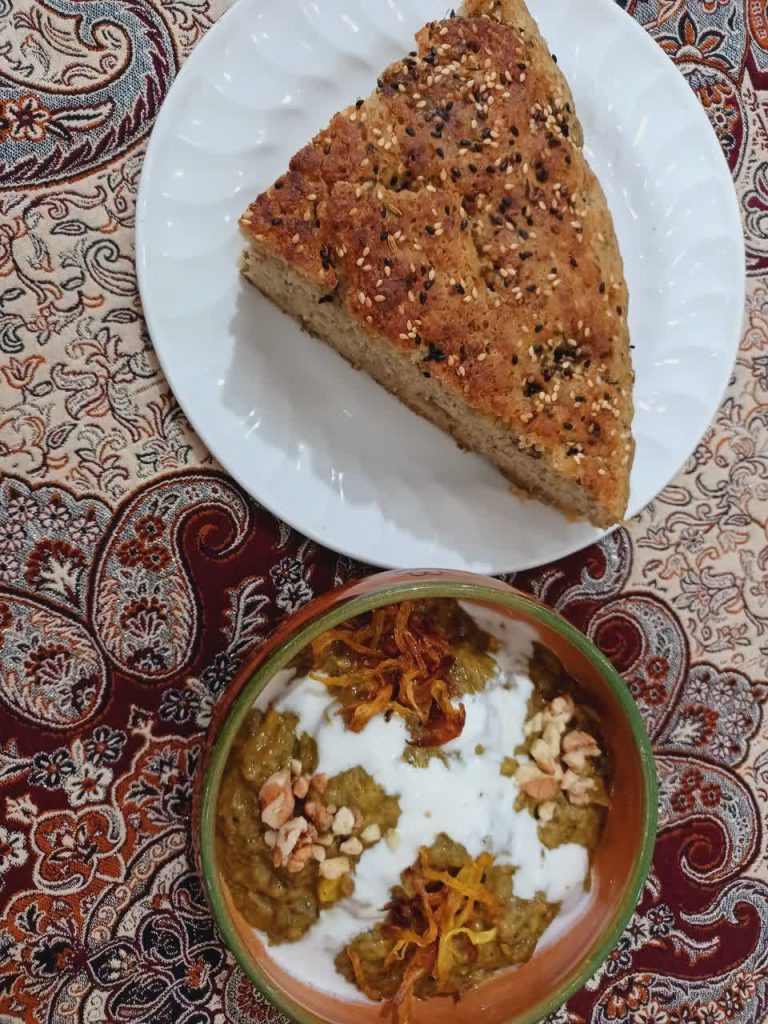
Today, the village boasts 10 cultural and historical landmarks, three eco-lodges, a local traditional market, and three dining venues, welcoming travelers throughout the year. Among these, the Jame’ Mosque of Fahraj, over 1,200 years old and a candidate for World Heritage status, stands as the village’s most iconic monument. Its mudbrick minaret, long used as a beacon in the desert, symbolizes the spiritual and architectural soul of Fahraj.
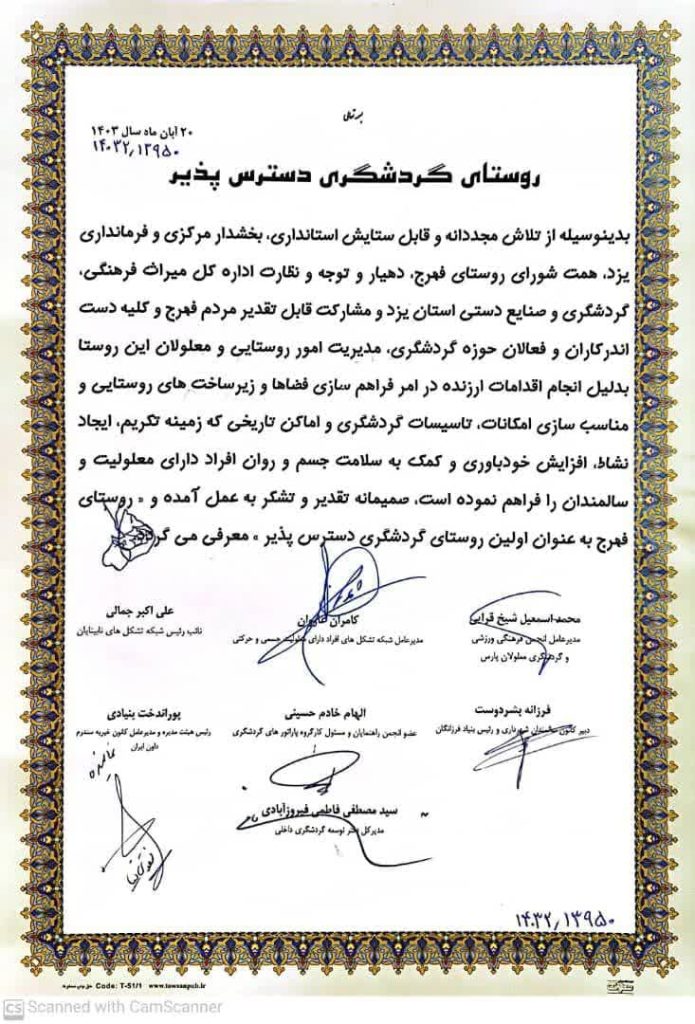
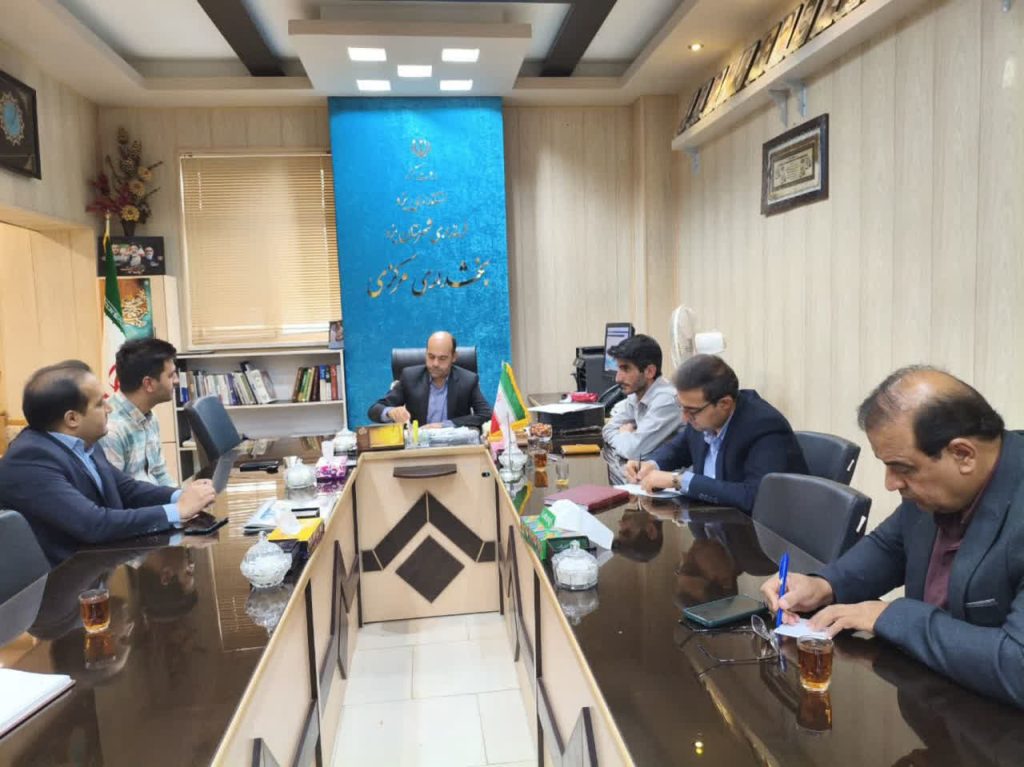
Since 2023, with the help of local facilitators, the village council, and the Department of Cultural Heritage, Fahraj has become Iran’s first accessible tourism village, adapting its historic fabric to welcome visitors with disabilities. This achievement has made Fahraj a national model for inclusive tourism in historical settlements.