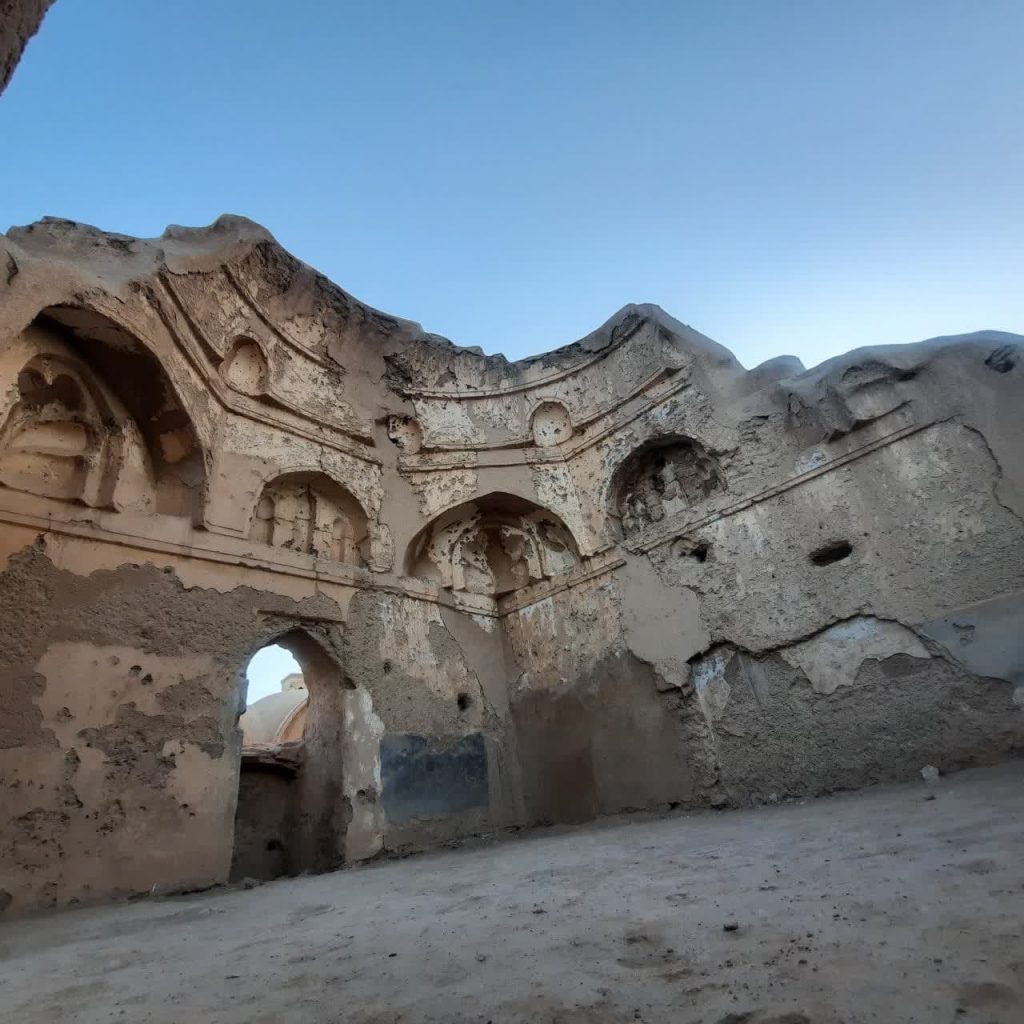
Alaghoundi Dome Chamber
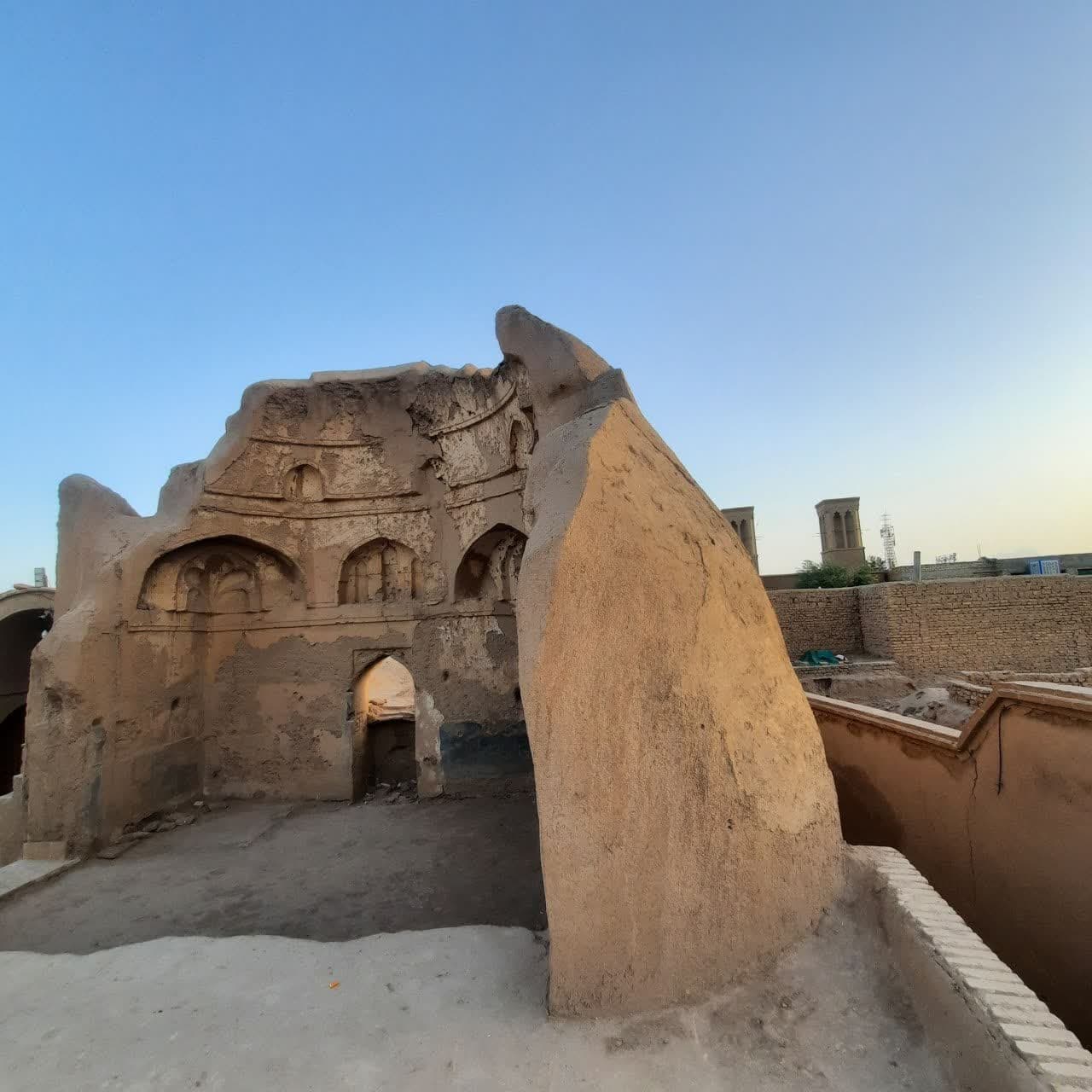
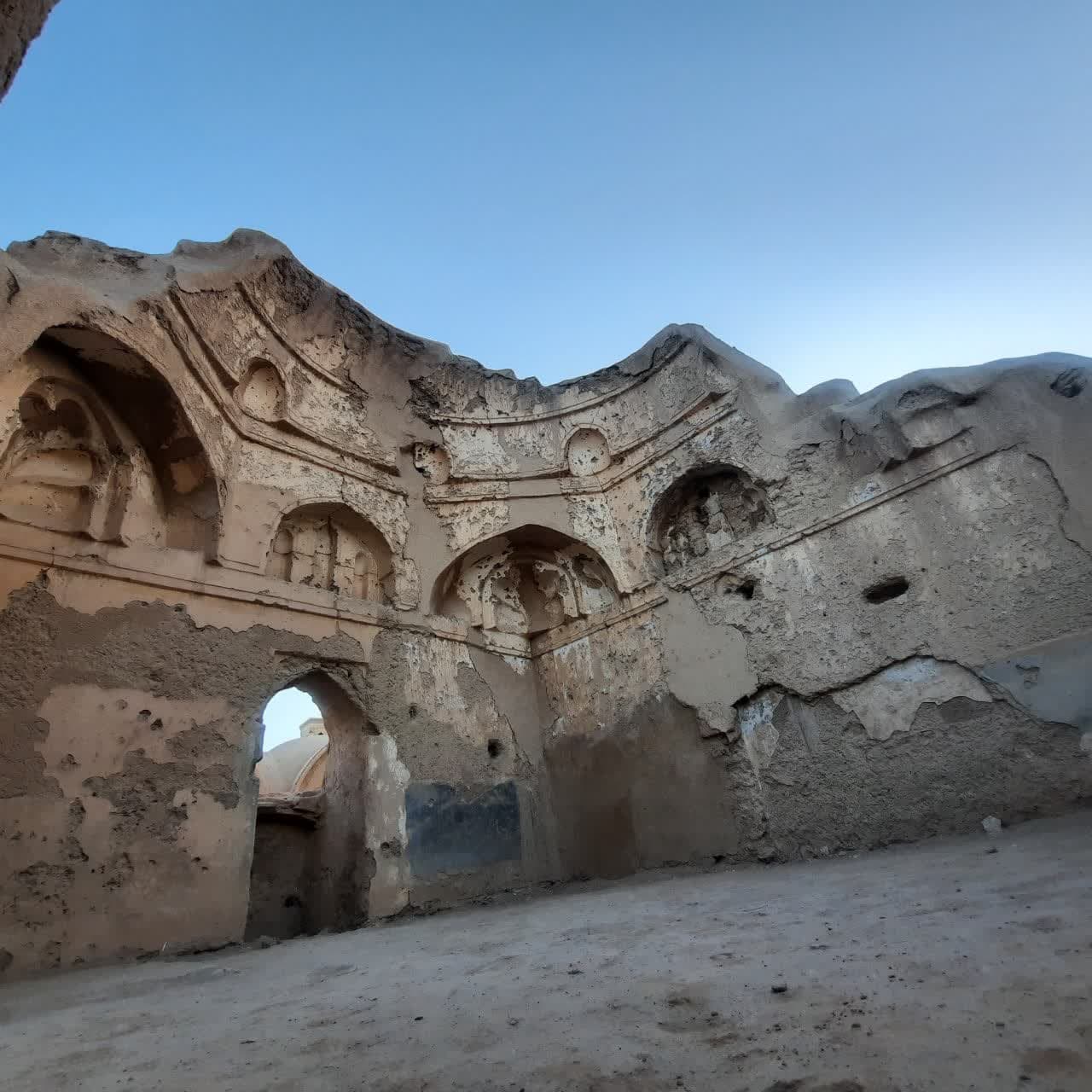
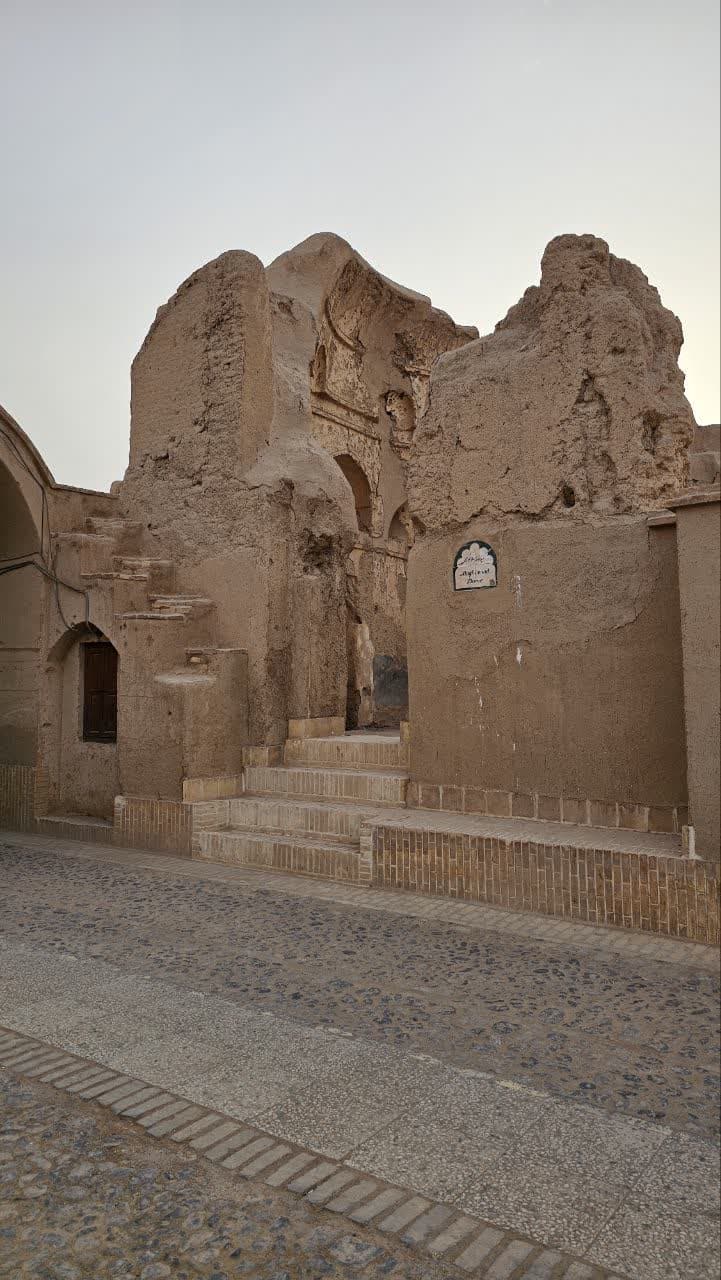
The Alaghoundi Dome Chamber, renowned for its unique architectural structure, is particularly notable for its scalloped (Shakanji-style) corner transitions. Each side of the dome chamber measures 7 meters, and the mudbricks used in its construction are 35 x 35 x 7 centimeters in size. The late architectural historian Mohammad Karim Pirnia interpreted the corner designs as being inspired by the motifs of the Jameh Mosque of Fahraj and suggested the structure originally served as a mausoleum. However, alternative views exist: some scholars believe it to be the remains of a Zoroastrian fire temple, while others suggest it functioned as a Sufi khanqah (monastic lodge) from the 6th or 7th century AH (12th–13th century CE).
Adjacent to the dome chamber and subterranean, there is a rock-cut mosque with two chambers and a mihrab (prayer niche) positioned perpendicularly to the entrance axes. A gravestone of a woman dating back to the 5th century AH (11th century CE) was once located in this mosque, indicating its considerable antiquity.
Sources:
Afshar, Iraj. Yadegārhā-ye Yazd (Monuments of Yazd), Vol. 1, Tehran: Iranian National Monuments Association, 1969.
Afshar, Iraj. Yadegārhā-ye Yazd, Vol. 2, Tehran: Iranian National Monuments Association, 1973.
Pirnia, Mohammad Karim. “The Jameh Mosque of Fahraj”, Iranian Archaeology and Art Journal, No. 5, 1970.
Pirnia, Mohammad Karim. Iranian Architectural Styles, ed. Gholamhossein Memarian, Tehran: Soroush Danesh Publishing, 1989.
Gharaeizadeh, Mohammadreza. “Alaghoundi Mosque of Fahraj,” Asar Journal, Issues 31 & 33, pp. 300–304.