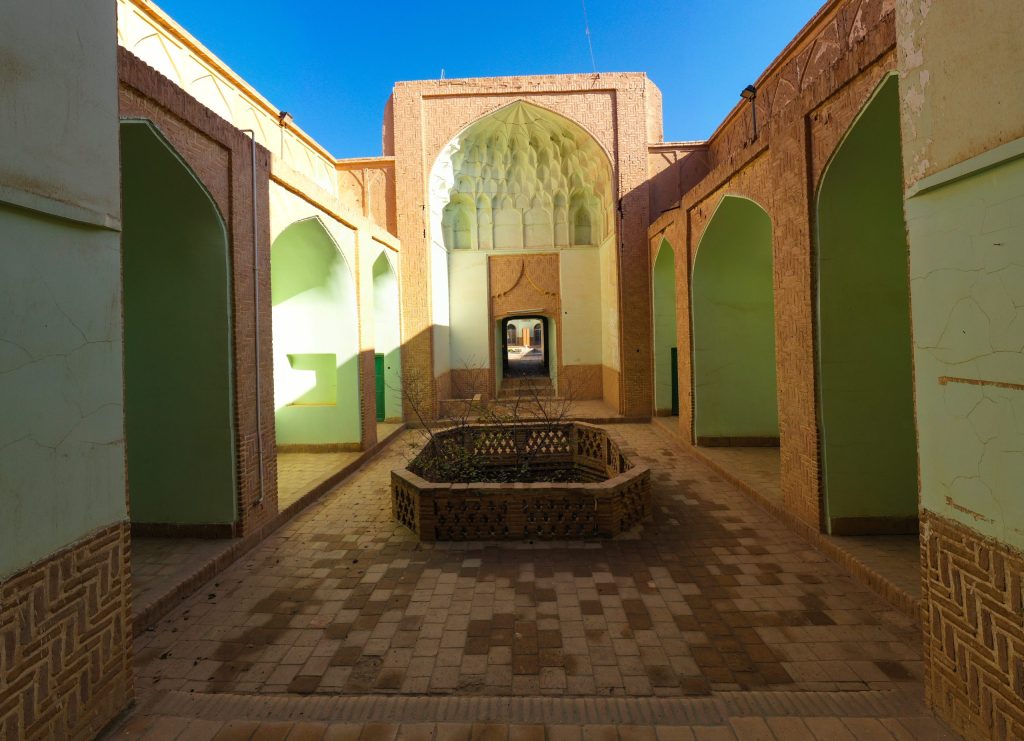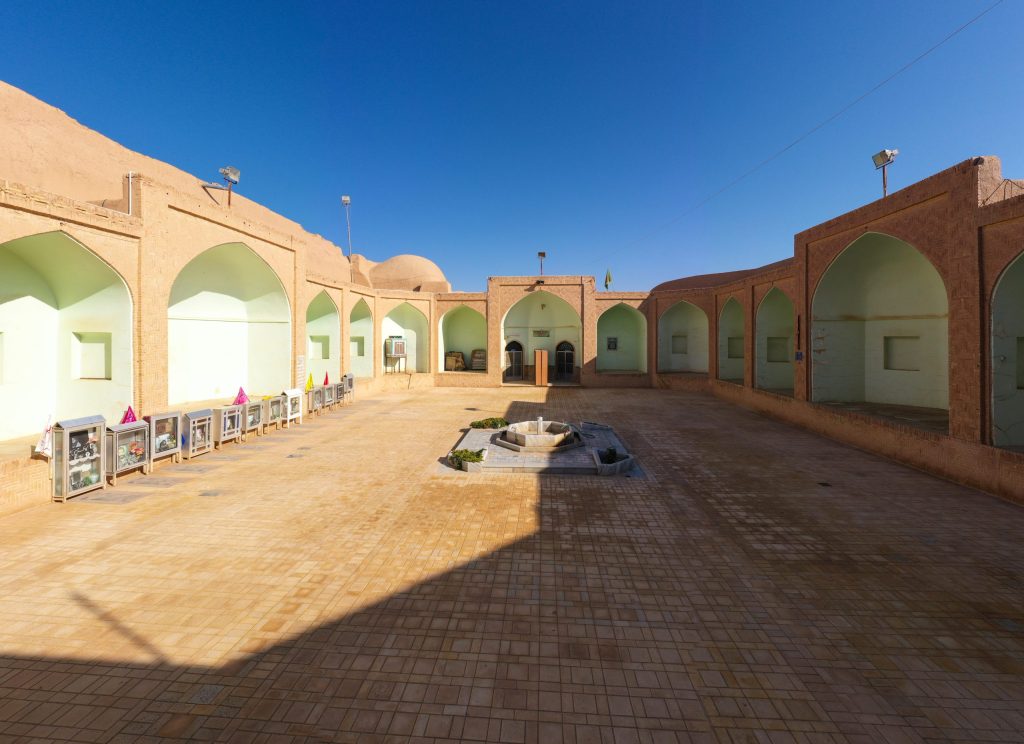
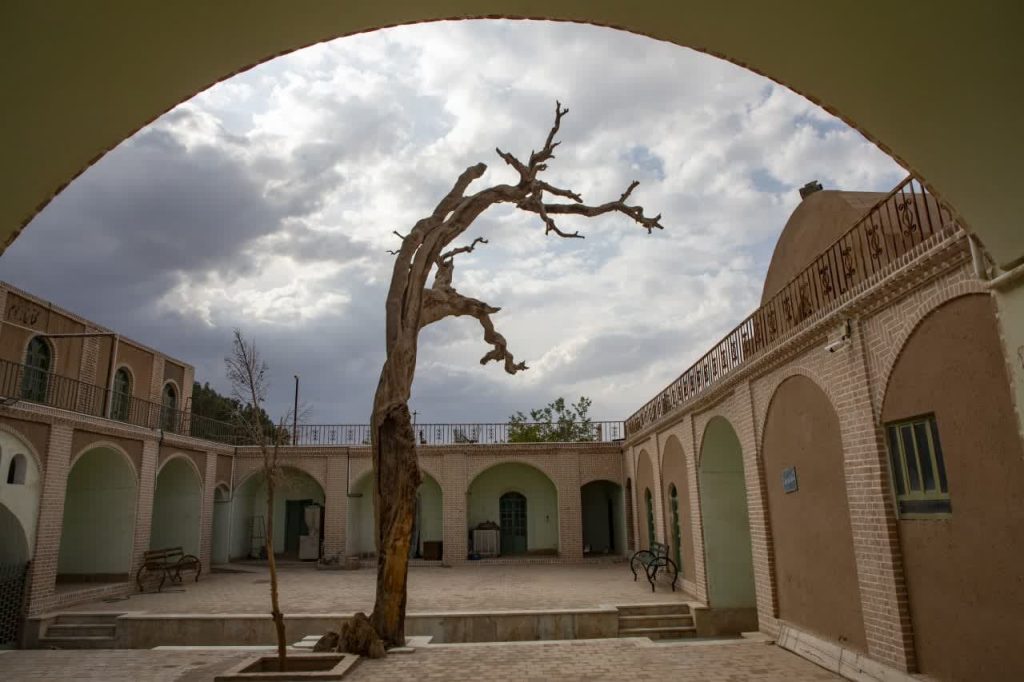
The historical complex of the Martyrs of Fahraj is located about one kilometer from the village of Fahraj. This complex, with historical significance dating back to the early Islamic period, is linked to the arrival of Muslim Arabs in Iran. During their journey towards Khorasan, after leaving Isfahan and passing through the desert of Tabas, the Muslims became lost in the desert sands. Some of the companions and followers, after much hardship, emerged near Fahraj. They did not speak for three days to recover from their fatigue, but on the fourth day, they began inviting the people of Fahraj to Islam. The people of Fahraj requested two days to gather with their families to accept Islam, after which they warmly welcomed the Muslims.
The people of Fahraj then consulted among themselves about converting to Islam. They sent envoys to the villages of Farafr and Khoydak for advice. However, the people of these villages refused to convert to Islam, stating that they would not abandon their old faith. In response, the people of Fahraj, discouraged by this advice, took up arms and decided to fight. As the night passed, they launched a surprise attack on the Muslim army, killing many of the companions of Prophet Muhammad (PBUH). Following this battle, the village of Farafr gradually declined and was eventually abandoned.
The next day, the forces of the Magi sought to expose the bodies of the fallen, but the desert near Fahraj had dried up, and the winds and sun intensified. The sun became dark, and the winds blew fiercely, burying the bodies under the sand. The wind continued for two days, and all the bodies of the fallen soldiers disappeared, leaving no trace on the ground.
Among the martyrs of Fahraj were Huwaytib ibn Hani, the nephew of Imam Ali (PBUH), Omar ibn Asim, Abdullah ibn Amer, Kharijah Wahshi, the killer of Hamzah ibn Abdul-Muttalib, and Abdullah ibn Umar, whose names are recorded in historical books. The late Afshar attributed the shrine of these martyrs to a rectangular room with multiple graves, some of which date back to the 8th and 9th centuries. Among the most prominent of these tombs is that of Majd al-Din Hassan, a descendant of Sayyid Rukun al-Din, dating back to 889 AH.
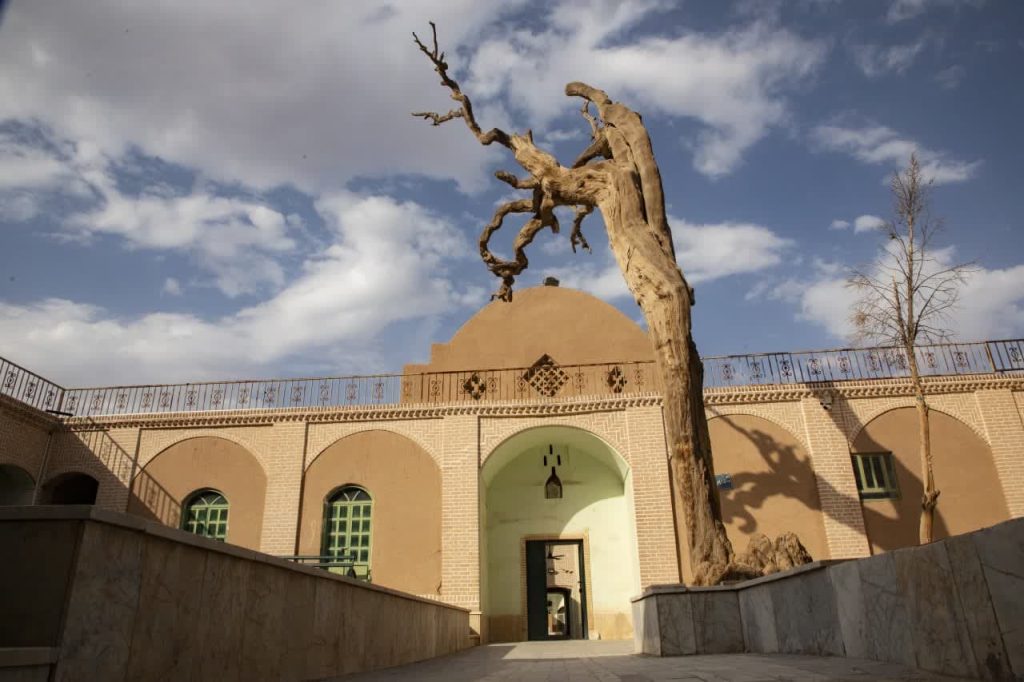
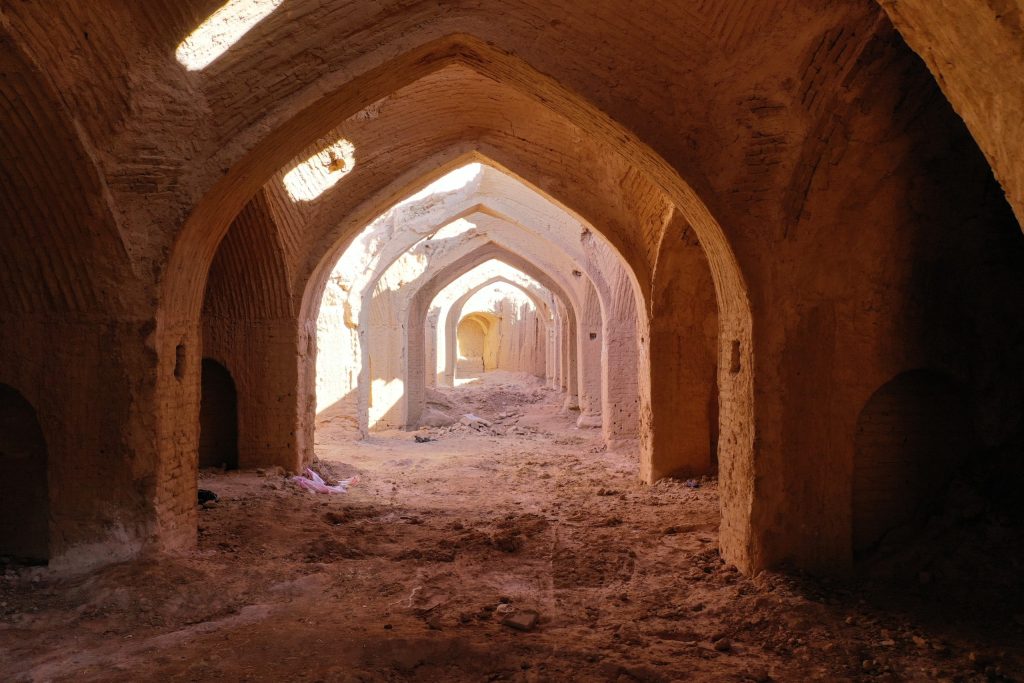
Mostofi Bafqi recounts that 800 years after the event, during the reign of Amir Mubarak al-Din, who was on his way to Kerman, he visited the Martyrs’ shrine and, in front of the illuminated tomb, built a grand school. He also diverted the Meryamabad canal to flow through the area and established a daily meal for the poor. The complex has been expanded since Amir Mubarak al-Din’s time and now includes a school, a 16th-century Sufi lodge, a mosque with tall entrance doors, a caravanserai, a camel barn, and an underground water cistern. The courtyard features a four-porch design, surrounded by a defensive wall and a circular tower. A dry tree, which Afshar identified as an ancient cypress, is one of the notable features of the Martyrs’ complex.
The Martyrs of Fahraj complex was officially registered as a national heritage site in Iran on November 9, 1999, with registration number 2444.
Afshar, Iraj. (1348) Yād-gārhā-yi Yazd: Mo‘arrefī-yi Abniyah-yi Tārikhi va Āthār-yi Bāstānī-yi Khāk-i Yazd. Vol. 1, Tehran: Iranian National Heritage Association.
Mostofi Bafqi, Muhammad Mufid. (1342) Edited by Iraj Afshar. Asadi Bookstore Publications, issue 5.