The Jameh Mosque of Fahraj: The Earliest Congregational Mosque in Iran
Believed by renowned Iranian architectural historian Mohammad Karim Pirnia to be the first congregational mosque in Iran, the Jameh Mosque of Fahraj holds a unique place in the architectural and religious history of the country. Scholars such as Shokoohi, Zamorshidi, Anisi, and Nikzad have dated the structure to between the 1st and 3rd centuries AH (7th–9th centuries CE). Researcher Alfieri, drawing architectural parallels with the Great Mosque of Samarra, suggests a slightly later origin, in the 3rd or early 4th century AH. Shokoohi also associates the mosque’s design with the Ukhaidir Palace, indicating a possible 2nd-century AH foundation.
Architectural and Artistic Features
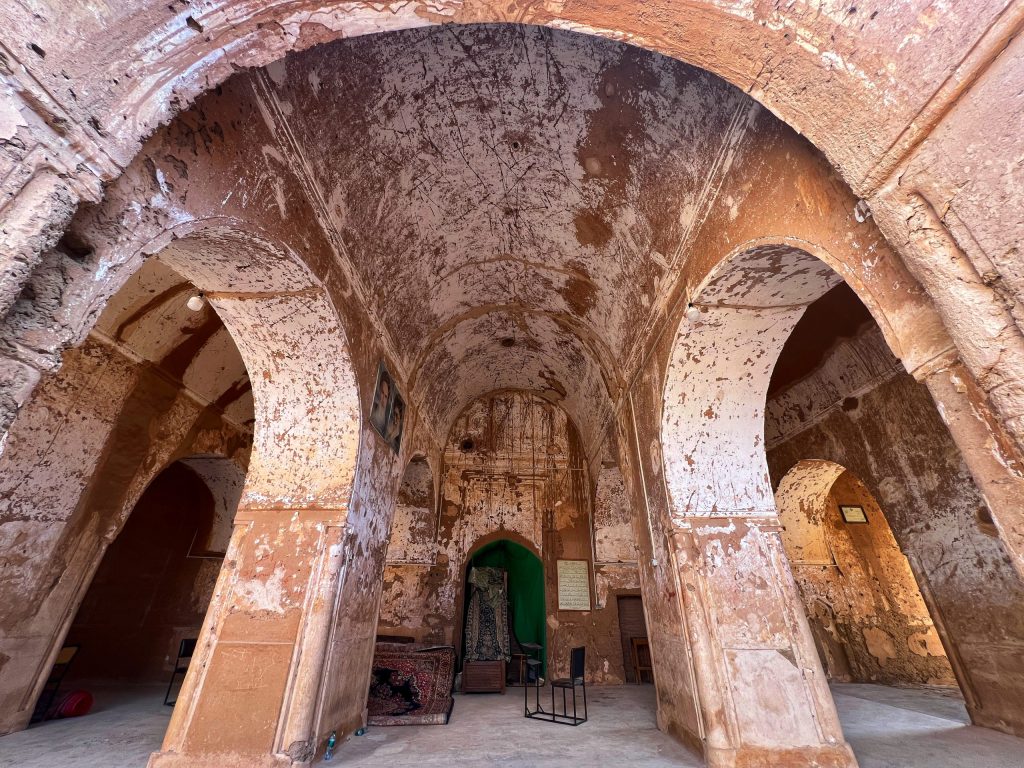
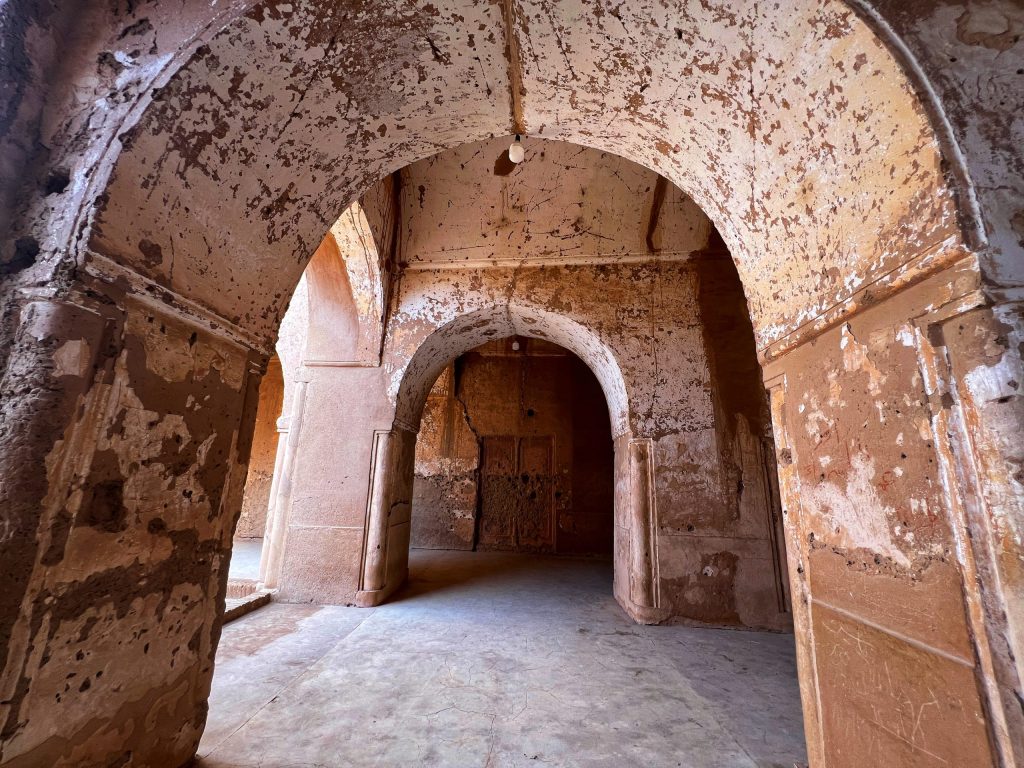
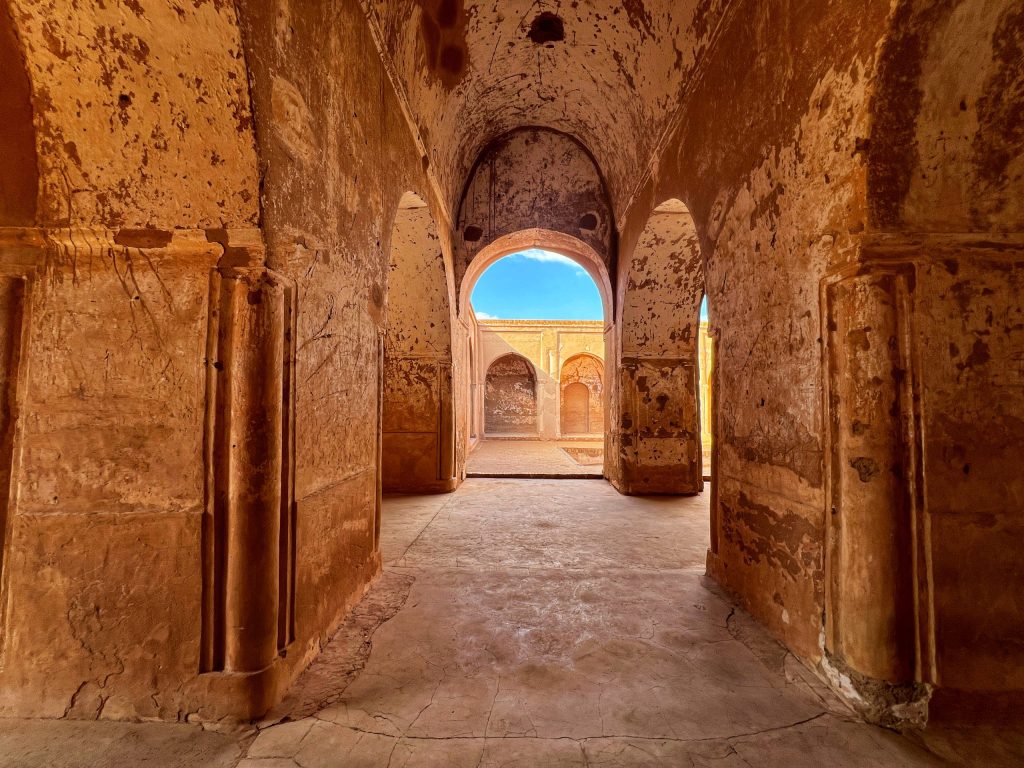
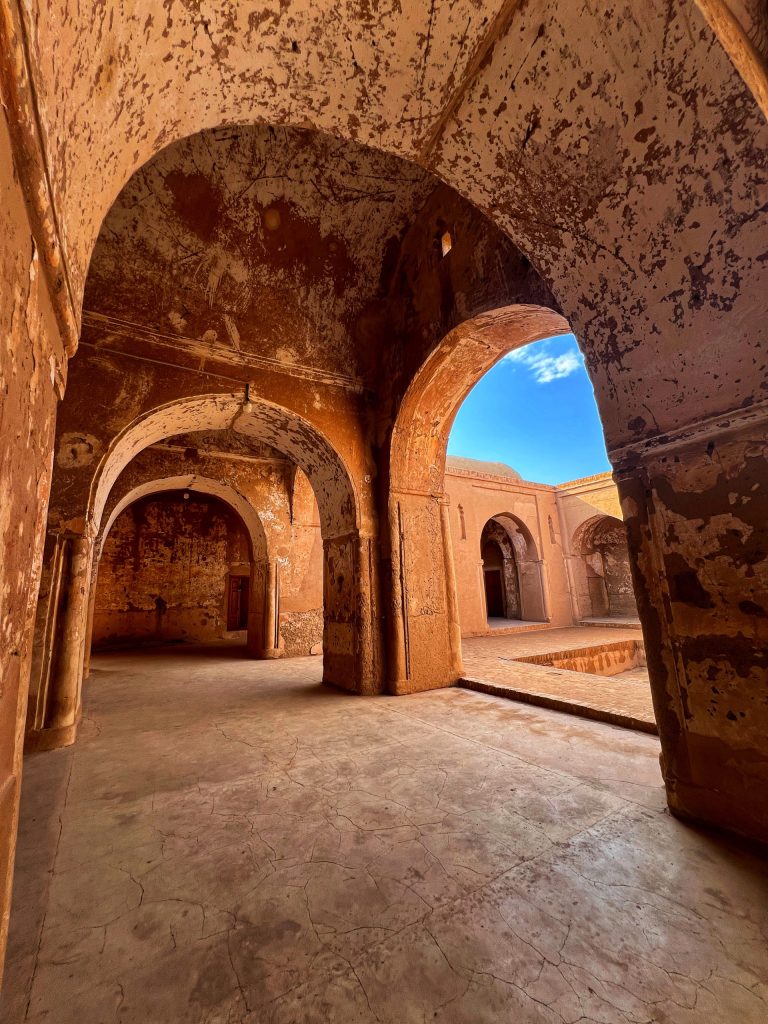
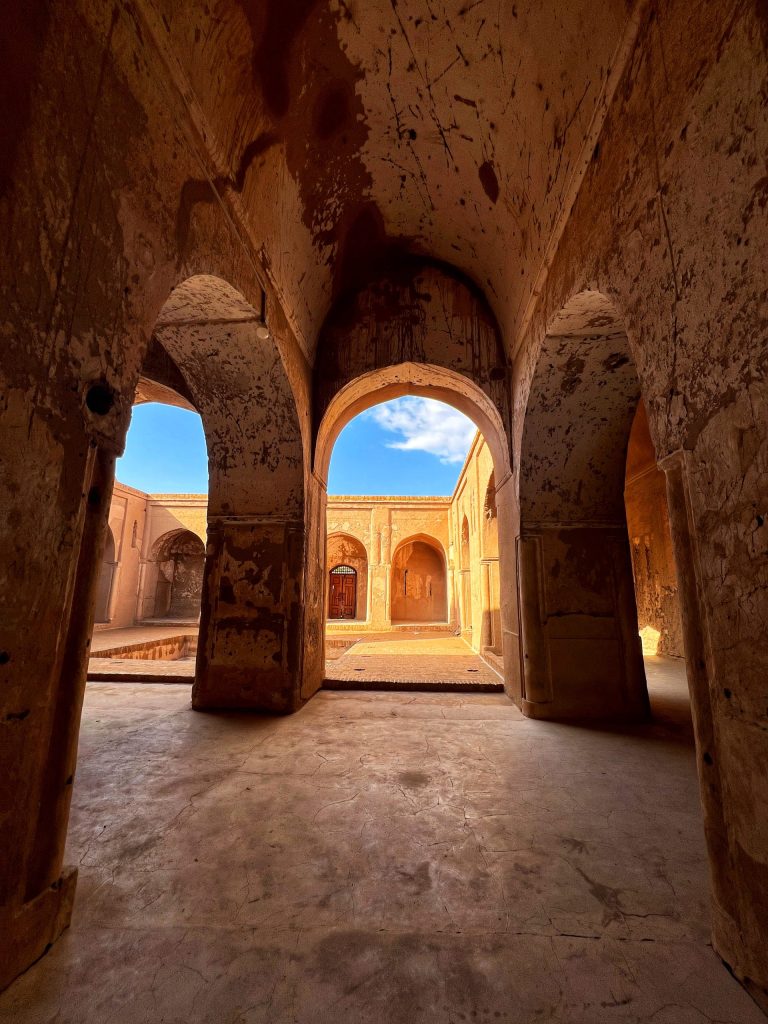
The mosque is famed for its hypostyle prayer hall, reminiscent of Sasanian architectural traditions. This includes the use of large adobe bricks, vaulted nave roofs (Taq-e Ahang), domed side iwans, and Sasanian-style ornamental motifs, including red-colored reliefs depicting symbolic “doors to paradise” and a mihrab with a sun motif. These elements highlight the transitional period between pre-Islamic and early Islamic architecture in Iran.
Pirnia recounts his discovery of the mosque in a 1970 article, describing how a mudbrick minaret caught his attention in the desert. Upon entering the mosque, he was struck by the building’s unaltered Sasanian features and urged locals to preserve rather than replace the aging structure. His account emphasizes the archaeological integrity and authenticity of the mosque.
Structural Characteristics
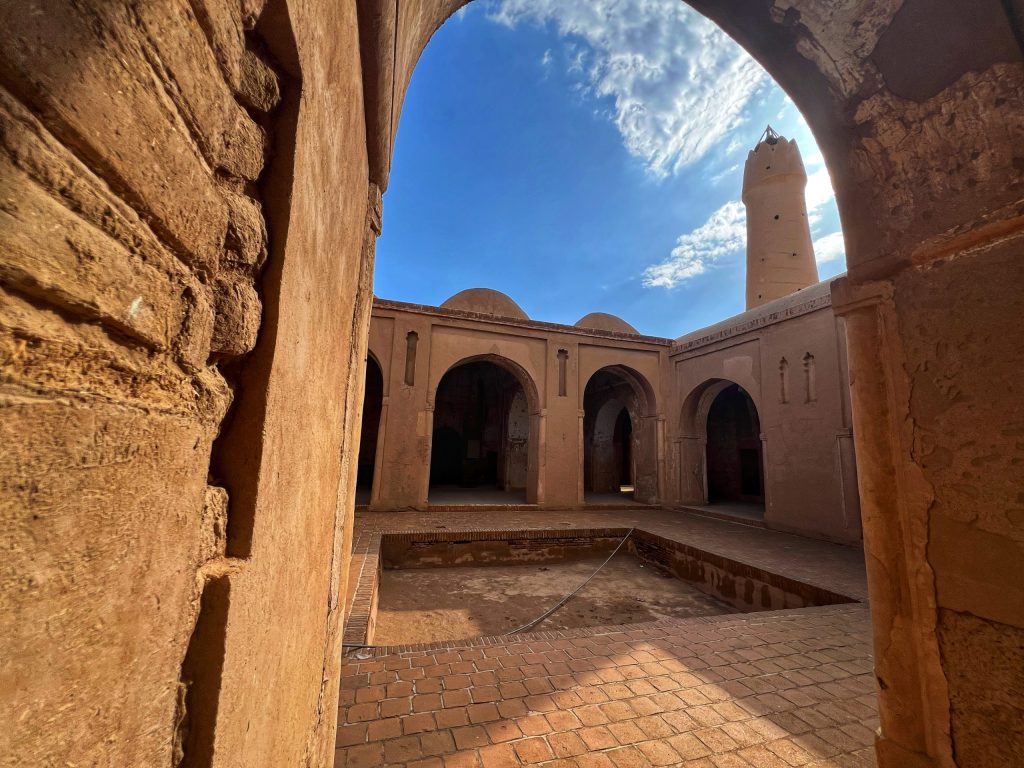
Layout: Features a central courtyard flanked by prayer halls and arcades.
Southern Iwan: Three arched bays with nave vaults.
East and West Sides: Two arched openings each with simple trompe-style domes.
Brick and Mortar: Bricks measuring 34 × 34 × 7 cm, set in traditional mud mortar.
Mihrab and Ornamentation: Early rectangular mihrab with later clay additions, flanked by decorative niches and wall paintings resembling motifs from the Taq Kasra in Ctesiphon.
Minaret: Constructed with massive clay bricks and topped with Persepolis-style battlements, the minaret historically served as a beacon for desert travelers, and possibly a fire altar in pre-Islamic times.
Proportions and Construction Details
Span-to-Height Ratio: Averaging 1:2, with spans such as 334 cm and vault heights of 673 cm.
Column Dimensions: Approximately 145 × 223 cm.
Plasterwork: Intricate stucco decorations similar to Sasanian palatial designs.
Cultural Significance and Recognition
Designated as a National Monument of Iran (No. 906) on December 21, 1970, the mosque has undergone several phases of conservation. It remains one of the best-preserved examples of early Islamic architecture in Iran, retaining many pre-Islamic architectural techniques while showcasing the adaptive reuse of Sasanian forms in Islamic religious spaces.